









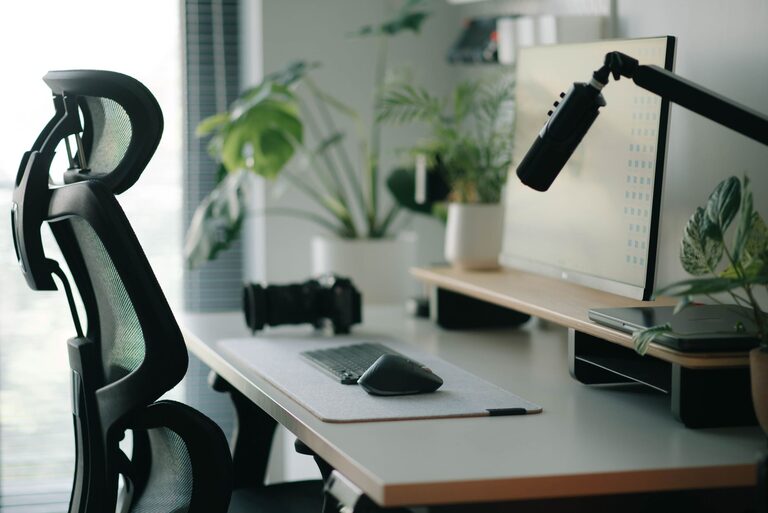
Creating a workspace that promotes both focus and comfort is essential for staying productive and feeling good throughout your workday. Whether you work from home or in an office, a well-organized and ergonomically sound desk setup can make a big difference in your performance and wellbeing. In this post, we’ll share practical tips to help you design a desk setup that supports concentration and physical comfort.
Why Your Desk Setup Matters
Your desk is where you spend many hours facing tasks, meetings, and brainstorming sessions. A cluttered, uncomfortable, or poorly arranged workspace can lead to distractions, fatigue, and even physical pain. On the other hand, a thoughtfully designed desk setup can:
– Improve your focus by reducing distractions
– Support good posture and reduce strain
– Help keep your energy levels steady throughout the day
Let’s explore how you can create such a workspace.
Choose the Right Desk and Chair
Desk Height and Size
Your desk should be at a height that allows your forearms to rest comfortably parallel to the floor when typing. Standard desk height is around 28 to 30 inches, but this can differ depending on your height. If your desk is not adjustable, consider an adjustable chair or a keyboard tray to achieve the correct positioning.
Make sure your desk surface is large enough to hold your essential items without crowding, but not so large that you have to stretch excessively to reach things.
Ergonomic Chair
Invest in a chair that provides good lumbar support and adjusts to your height. Your feet should rest flat on the floor or on a footrest, with your knees at roughly a 90-degree angle. Sitting in a supportive chair helps prevent back and neck pain.
Position Your Monitor for Optimal Viewing
Proper monitor placement can reduce eye strain and neck discomfort.
– Place your monitor about an arm’s length away.
– The top of the screen should be at or just below eye level.
– Tilt the screen slightly upward to reduce glare.
– If you use multiple monitors, position the primary one directly in front of you, and the secondary ones adjacent.
Organize Your Desk for Focus
Clutter can lead to distraction. Here’s how to keep your desk tidy:
– Limit essentials: Only keep items you use daily on your desk.
– Use organizers: Utilize trays, drawers, or pen holders to keep small items in place.
– Cable management: Use clips or sleeves to keep cords neat and out of the way.
– Minimal decorations: A few personal items can make your space inviting but avoid overcrowding.
Lighting: Brighten Up Without Strain
Good lighting improves focus and reduces eye fatigue.
– Use natural light whenever possible, but avoid glare on your screen.
– Desk lamps with adjustable brightness and color temperature can help.
– Position lamps to minimize shadows and reflections.
Improve Comfort with Accessories
Consider adding these items to enhance comfort and productivity:
– Keyboard and Mouse: Choose ergonomic models to reduce wrist strain.
– Wrist Rest: Helps maintain a neutral wrist position during typing.
– Footrest: Supports your feet if your chair height doesn’t allow them to rest flat.
– Plants: Small indoor plants can boost mood and air quality without taking up much space.
Keep Movement in Mind
Sitting for long periods can negatively affect your health and focus. Try to:
– Stand up and stretch every 30–60 minutes.
– Consider a sit-stand desk or a desk converter to alternate between sitting and standing.
– Take short breaks to walk or do light exercises.
Personalize Your Space Mindfully
Adding personal touches can make your desk a pleasant environment, but keep it balanced to maintain focus:
– A framed photo or a small piece of art
– Inspirational quotes or calendars
– Soothing colors in your desk accessories
Final Thoughts
An effective desk setup for focus and comfort balances ergonomics, organization, and a touch of personalization. By paying attention to your chair and desk height, monitor placement, lighting, and decluttering, you can create a workspace that supports your best work and helps you feel comfortable throughout the day. Remember to listen to your body and adjust your setup as needed—small changes can make a big difference!